T3 Class, No.563
Built March 1893
William Adams
Class Introduction
William Adams was Chief Mechanical Engineer of the London and South Western Railway between 1878 and 1895. During the early part of his tenure he designed a number of successful locos that were some of the largest and most powerful express passenger locomotives of their day, however by the late 1880’s as speeds and train weight increased these were becoming less suitable for this work. There was a need for more modern designs to cope with the rigours of everyday operation.
This first manifested itself by an order in May 1889 for a class of larger 4-4-0’s with 7’1” driving wheels, which were introduced between 1890 and 1892 and became the ‘X2’ class. The ‘T3’ class was originally planned as simply a 6’7” driving wheel version of the ‘X2’ locomotives, however trials undertaken with ‘X2’ No.582 in July 1891 showed the need for greater steaming capacity and it was decided to further revise the design. As such, the ‘T3’ class therefore were provided with a 6” longer coupled wheelbase than the ‘X2’s, to enable the inclusion of a 6’10” long firebox with a 19¾ square foot grate, along with a series of other detail changes. These changes created one of the most capable express passenger locomotives of their time.
Twenty ‘T3’ locomotives were built at Nine Elms works between 1890 and 1893, and numbered 557-576. When new, allocations were shared between Nine Elms, Northam (Southampton), Fratton, Salisbury and Exmouth Junction. They quickly proved an excellent locomotive, with only relatively minor changes taking place in LSWR days. The whole class passed into Southern Railway ownership at grouping, and through 1923 to 1926 were painted Maunsell green and their numbers amended with an ‘E’ prefix. The development of more modern locomotives started to make the ‘T3’s redundant though, and they started to be withdrawn from No.561 in October 1930, and by August 1933 only 3 remained in use.
These last 3 locomotives (557, 563 and 571) clung on to life after this point, with 557 being withdrawn in April 1936 with cracked frames. Both 563 and 571 made it into service during the Second World War, but by 1945 both of these had been withdrawn from service and placed in store. This could have proved the end of the story for the ‘T3’ class, however…
Details
| Class Built | 1892- 1893 |
| Total Built | 20 |
| Cylinders (outside) | Outside pair, 19″ x 26″ |
| Wheel Arrangement | 4-4-0 |
| Bogie Wheels | 3ft 7in |
| Driving Wheels | 6ft 7in |
| Tractive Effort | 17,673 lbf (78.6 kN) |
| Boiler Pressure | 175 psi |
| Firebox Grate | 19 ¾ sq. ft |
| Engine Weight | 48 tons |
| Tender Weight | 35 tons |
| Total Locomotive Weight | 84 tons |
| Total Locomotive Length | 54 ft 23⁄8 in |
| Water Capacity | 3300 gallons |
| Coal Capacity | 3 tons |
No.563 – The Great Survivor
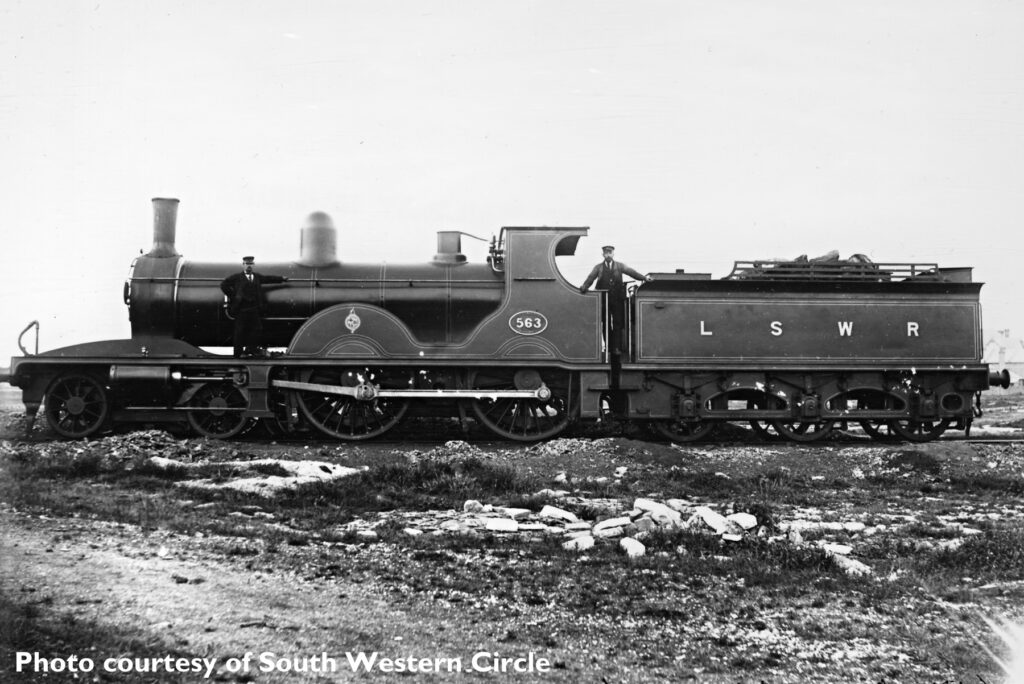
The Swanage Railway’s example, No.563, was completed in March 1893 and was allocated new to Nine Elms shed. No.563 was subsequently reallocated to Guildford in around 1905, and in around 1906 underwent heavy work which included the removal of piston tail rods, removal of suspension equalising beams and the fitting of a Drummond chimney. No.563 then spent much of the following 20 years alternating between being based at Eastleigh and Guildford sheds, then receiving a general overhaul in August 1935 despite most of the rest of the class being withdrawn by this time. After this overhaul No.563 was transferred to Salisbury, working mainly as station pilot or on ‘slow’ workings to Bournemouth and generally being looked after by shed staff, until transfer to Eastleigh in February 1938.
No.563 worked infrequently during this time at Eastleigh, and failed while working a Fawley goods train in March 1939 resulting in its immediate withdrawal. The locomotive again displayed its knack for survival though, as with the ongoing political situation in Europe it was not cut up and reinstated to store the following month. It then received a general overhaul, re-entering traffic in November 1939, and saw service through the war from both Basingstoke and Eastleigh sheds until it was withdrawn for what looked like the final time following the cessation of hostilities. By this time, it had been in service for 52 years, and run a total of 1,571,150 miles.
No.563 was in store from withdrawal in August 1945 through to January 1948, when it was towed to Kimbridge Junction to await scrapping at Dinton. At this time though, planning was taking place for the centenary exhibition at London Waterloo, and it was realised that all of the Adams tender engines would soon be scrapped. A visit was arranged to Kimbridge Junction, and No.563 again escaped scrapping and was selected to take part in this, being moved to Eastleigh Works for returning to LSWR condition. On 7 June 1948 it worked with LSWR tri-composite brake coach No.6474 (now on display at the National Railway Museum, York) to Micheldever for photographs, then on the 11 June on to London Waterloo for exhibition along with LBSCR ‘Terrier’ No.82 Boxhill and ‘West Country’ No.34017 Ilfracombe.
Following this exhibition, No.563 was placed in store in the electric carriage shed at Farnham, only making rare public appearances and quickly deteriorating, to the extent that in 1958 it was moved to Tweedmouth for further storage until the conversion of the Clapham Transport Museum could be finished. No.563 returned to Eastleigh for further restoration in August 1959, emerging in January 1961 and being transferred to the Clapham Transport Museum where its LSWR livery was applied. No.563’s display for a number of years was relatively unremarkable, being transferred to the newly-opened National Railway Museum in York in 1975 for further display, however this history was only a taste of things to come.

‘Railway Children’ Fame and Transfer to Swanage
Following the opening of the National Railway Museum’s ‘Locomotion’ outpost at Shildon, No.563 moved there for display, however the planning of a new ‘Railway Children’ theatrical production saw the locomotive cross the Atlantic Ocean and travel to Toronto, Canada in 2011, becoming one of a very small number of extant locomotives to cross the Atlantic. No.563 subsequently starred in theatrical performances both in Toronto and, following its return to the UK, in London where a 1,000-seat pop-up theatre had been constructed for the purpose. This brought the locomotive to a whole new audience, however following the end of this theatre show the locomotive was again stored, without public access.
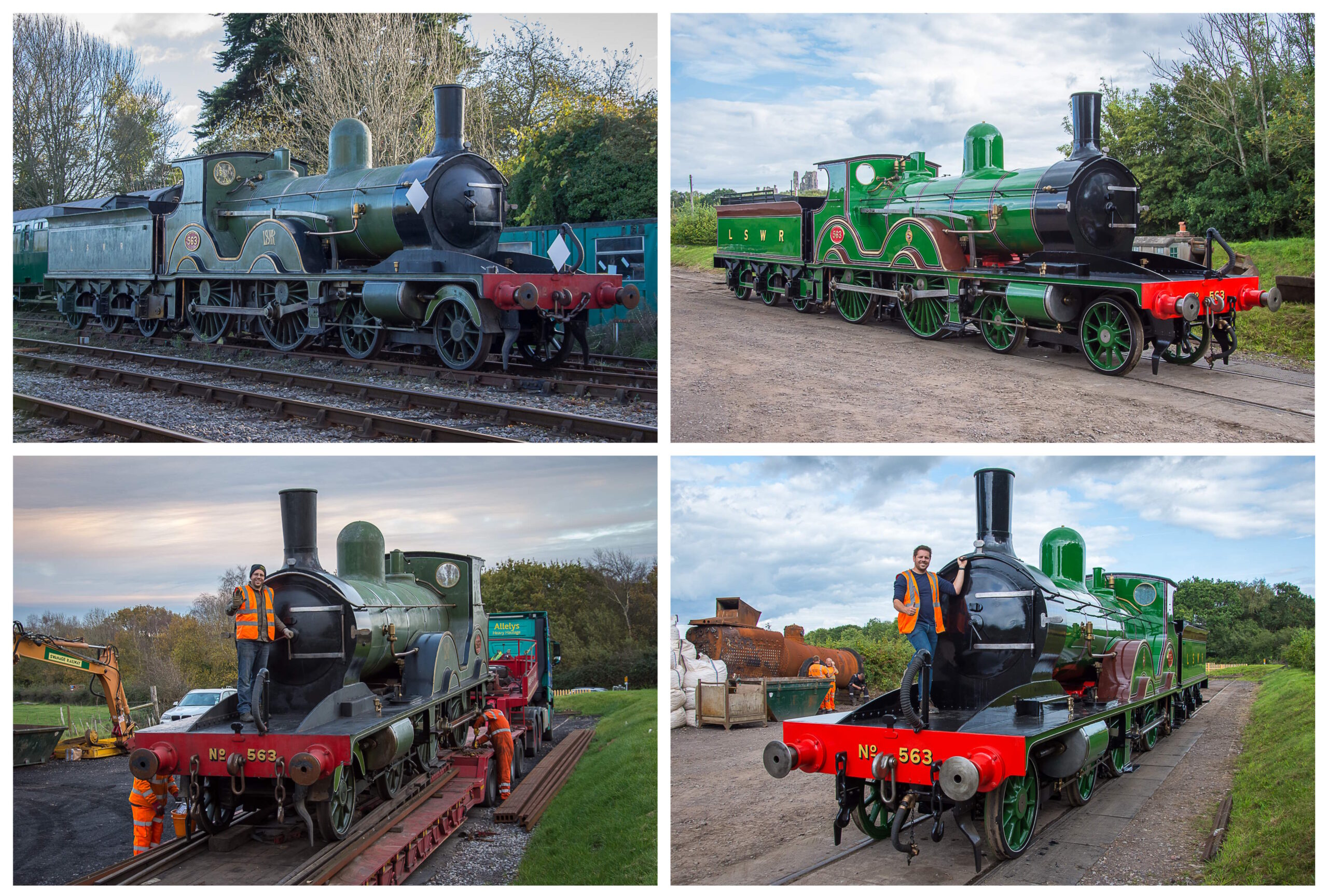
A series of negotiations saw the National Railway Museum agree to transfer ownership to the Swanage Railway Trust, a charitable organisation dedicated to preserving the Swanage branch line and to preserving the railway heritage of southern England. No.563 fits perfectly into these objectives, and ownership was formally transferred on 30 March 2017. Arriving on the Swanage Railway on 12 April 2017, No.563 was initially placed on display at Corfe Castle, before a generous donation and a Crowdfunding campaign enabled the locomotive to be moved to the Flour Mill workshops for initial safe storage and an investigation to take place into a return to steam, over 60 years since it last steamed.
Preservation Era – Fundraising and the Return to Steam
After its return from theatrical duties and a period in storage, a new and transformative chapter began for No.563 in 2017. Following a review of the National Railway Museum’s collection, it was agreed that the locomotive’s historic links to Dorset and the LSWR made it a natural fit for the Swanage Railway Trust. Ownership was formally transferred on 30 March 2017, and the locomotive arrived on the Swanage Railway on 12 April 2017, where it initially went on display at Corfe Castle. With a clear ambition to restore the last surviving Adams tender engine to full working order, the newly formed 563 Locomotive Group (563LG) launched a public appeal later that same year to investigate returning the locomotive to steam.
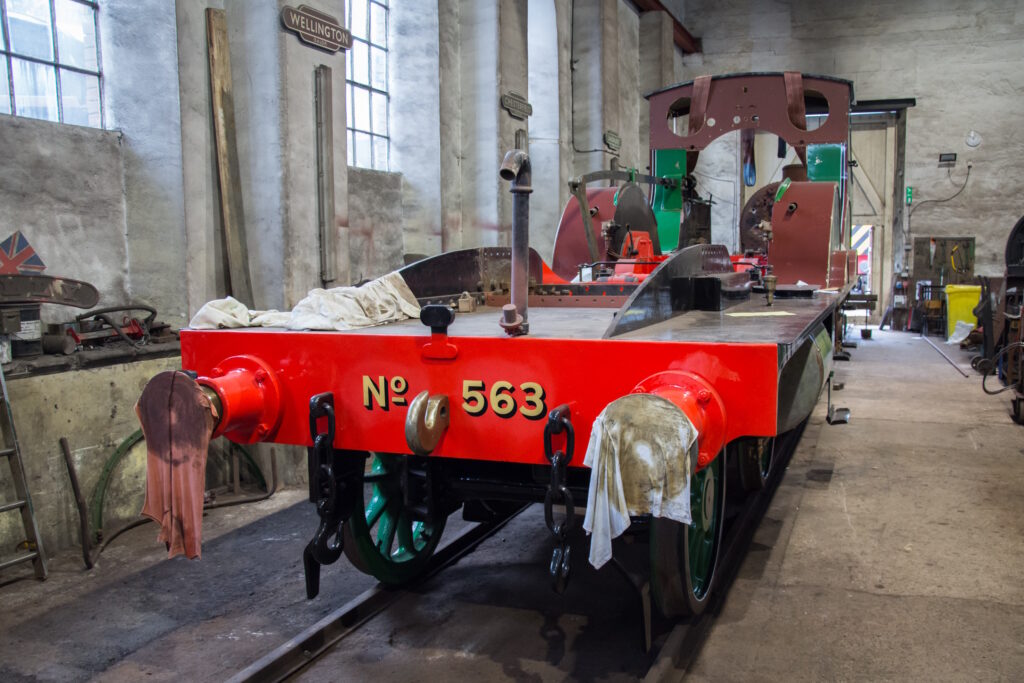
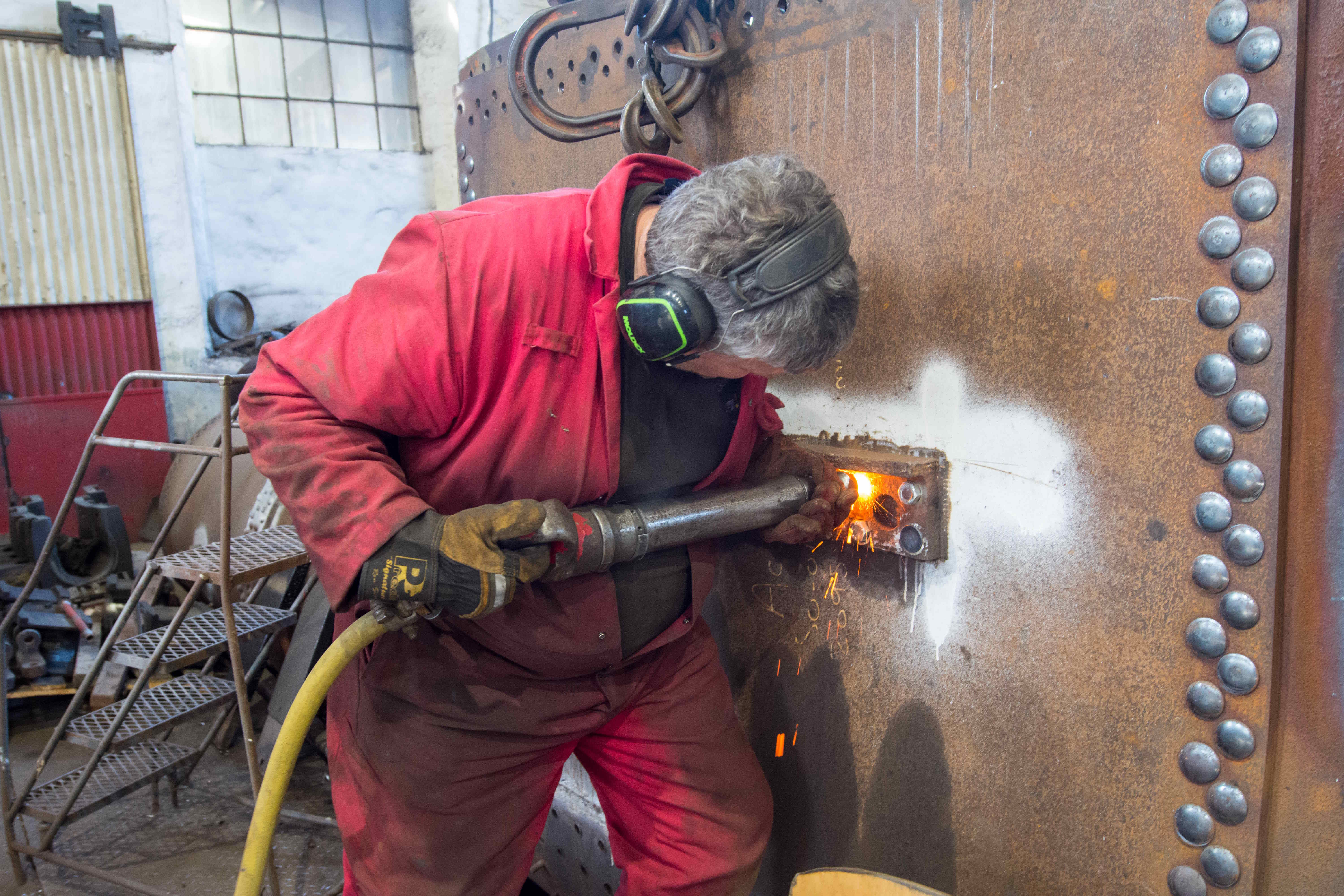
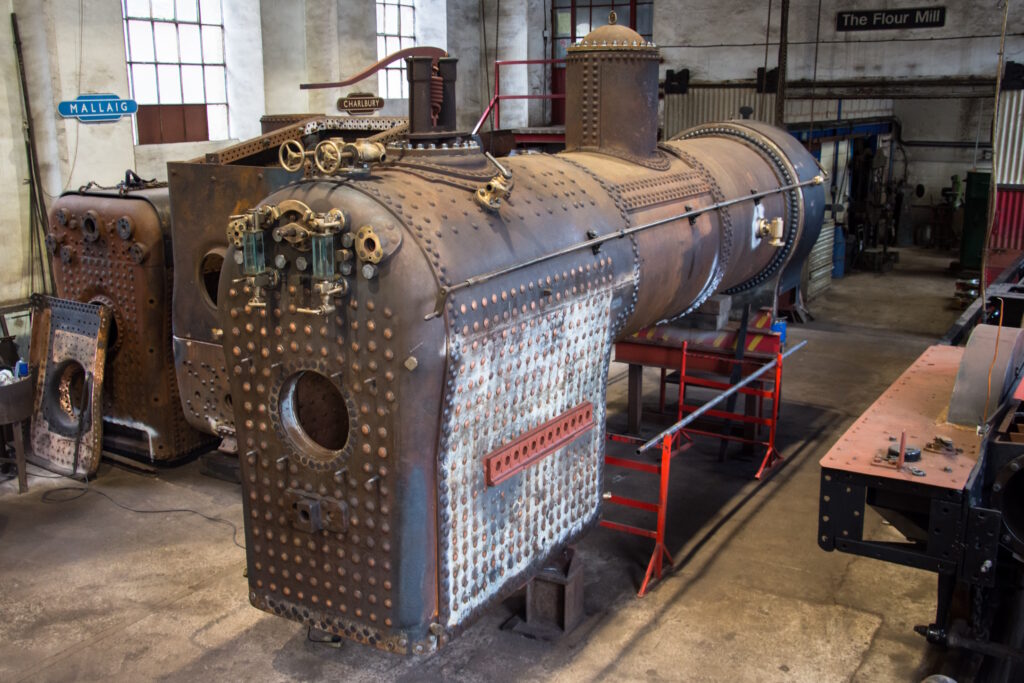
In November 2017 the T3 was moved to the Flour Mill workshops in the Forest of Dean for an extensive strip‑down and mechanical survey. This work quickly revealed that the chassis and running gear were in unexpectedly good condition, having benefited from substantial work undertaken at Eastleigh Works before the 1948 Waterloo centenary. The boiler, however, was in far poorer condition and would require a comprehensive rebuild, including the fabrication of a new copper inner firebox and new steel outer firebox plates. This discovery shaped the scope of the restoration that followed.
In 2019, after the most detailed examination of the locomotive in its preservation history, the Swanage Railway Trust formally authorised the return of No.563 to steam. A significant fundraising campaign began, aiming to raise around £350,000 to complete the overhaul, and volunteers continued work alongside specialist contractors. Progress accelerated through 2020 and 2021: the frames were shot‑blasted and repaired, the wheelsets inspected, and a major milestone was reached with the locomotive being re‑wheeled at the Flour Mill in 2022. By this point, construction of the new firebox and the ordering of boiler tubes were underway, with the project entering its most expensive and labour‑intensive phase.
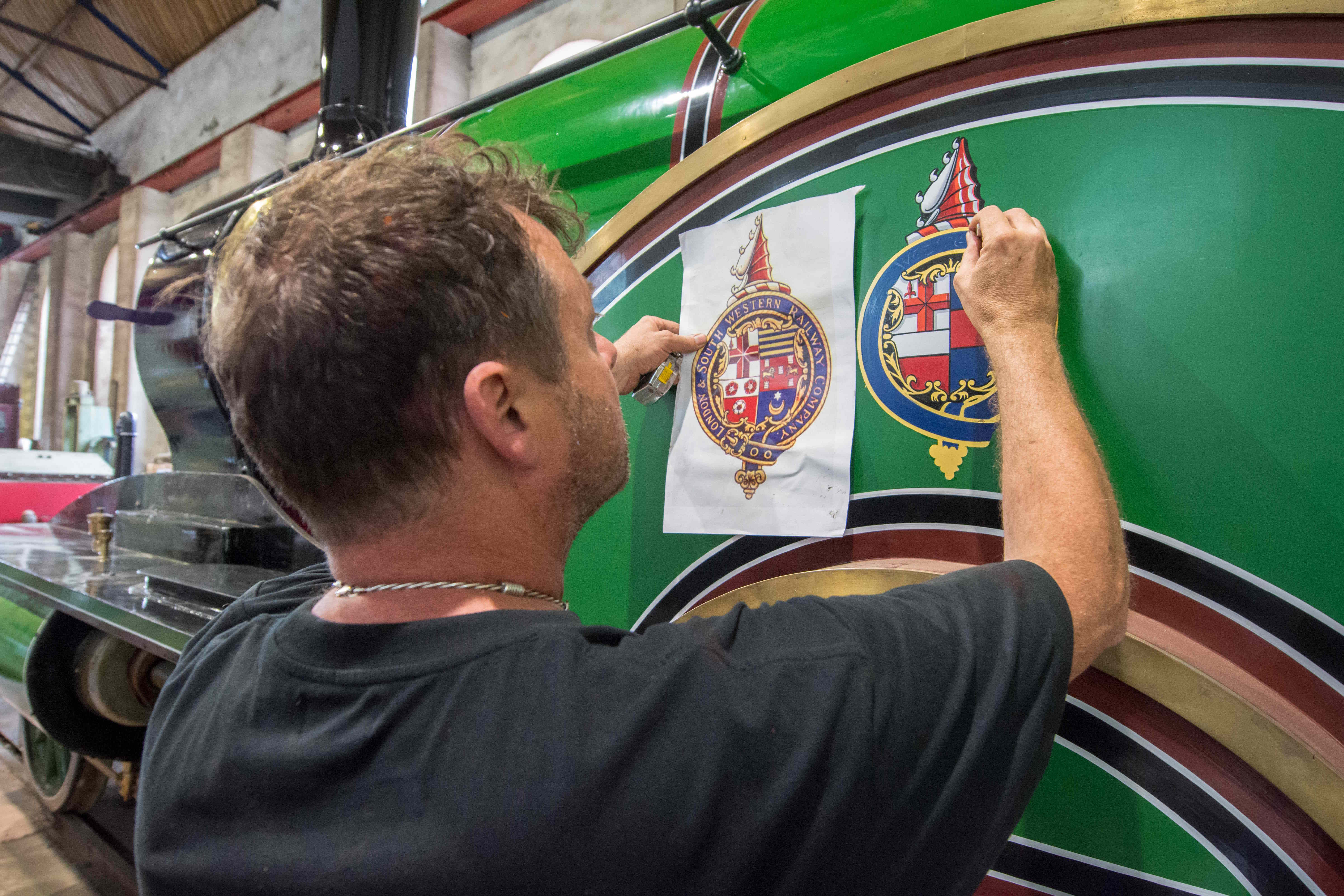
The restoration gained further momentum with public fundraising and match‑funded appeals, including major contributions toward completing the boiler and tender restoration. By mid‑2023 the T3’s overhaul was nearing completion, and in August 2023 the locomotive returned to the Swanage Railway following a six‑year, £650,000 restoration. Reunited with its restored tender, No.563 began commissioning and testing, operating under its own power for the first time since 1948. This long‑awaited moment culminated in October 2023, when No.563 hauled its first passenger train in 75 years, resplendent in lined Drummond green and marking not just its own rebirth, but the centenary of the Southern Railway and the 185th anniversary of the LSWR.
The reborn T3 now stands as a remarkable testament to Victorian engineering, the dedication of Swanage Railway volunteers, and the generosity of hundreds of supporters. More than simply a restoration, the project has re‑established No.563 as a living, working link to the earliest era of railways in Dorset – once again echoing the sounds and spirit of the LSWR across the Isle of Purbeck.